Textiles, thoughtfully explained
Coyuchi Organic Cotton: Understanding Certification, Construction, and Care
An organic label tells part of a textile’s story, but not all of it. To understand how a cotton piece is made and how to care for it, look at the certification alongside the fabric construction, finishing details, and product-specific instructions.
Published November 14, 2026
Organic cotton can feel crisp, smooth, textured, or softly substantial. Those differences aren’t explained by the word “organic” alone. A woven pillow cover and a knitted baby snuggle sack may both be made with organic cotton, yet their structure, finish, and everyday use are quite different.
That’s why it helps to read textile descriptions in layers. Certification information can offer context about fiber sourcing and production standards. Construction terms explain how the fabric is assembled and what details shape its feel. Care instructions, meanwhile, tell you how to handle the particular finished item—not what to assume based on its fiber alone.
In Coyuchi product descriptions, examples include GOTS certification, Fair Trade Factory certification, organic cotton sateen, knit construction, and handstitched texture. Each detail answers a different question. Read together, they can give shoppers a clearer picture of a textile’s materials, features, and care needs without treating a label as a guarantee of every quality or outcome.
What “organic cotton” tells you—and what it doesn’t
Organic cotton refers to cotton grown under organic agricultural requirements. That is useful information about the fiber, but it doesn’t describe every step that follows. Spinning, weaving or knitting, dyeing, finishing, sewing, and packaging can all contribute to a textile’s final characteristics. Nor does the fiber name tell you whether the finished material is sateen, jersey knit, canvas, or another construction.
It also doesn’t tell you how a piece will feel in your hand. Fiber quality, yarn choices, the structure of the fabric, finishing processes, and the way a product is sewn all play a part. A soft handfeel may be a stated product feature, but shoppers should not assume that all organic cotton feels identical or that a certification guarantees a particular level of softness.
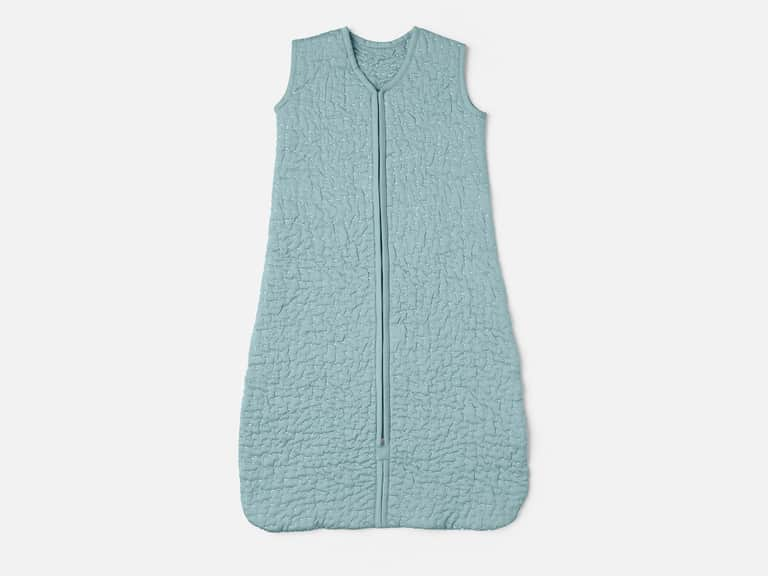
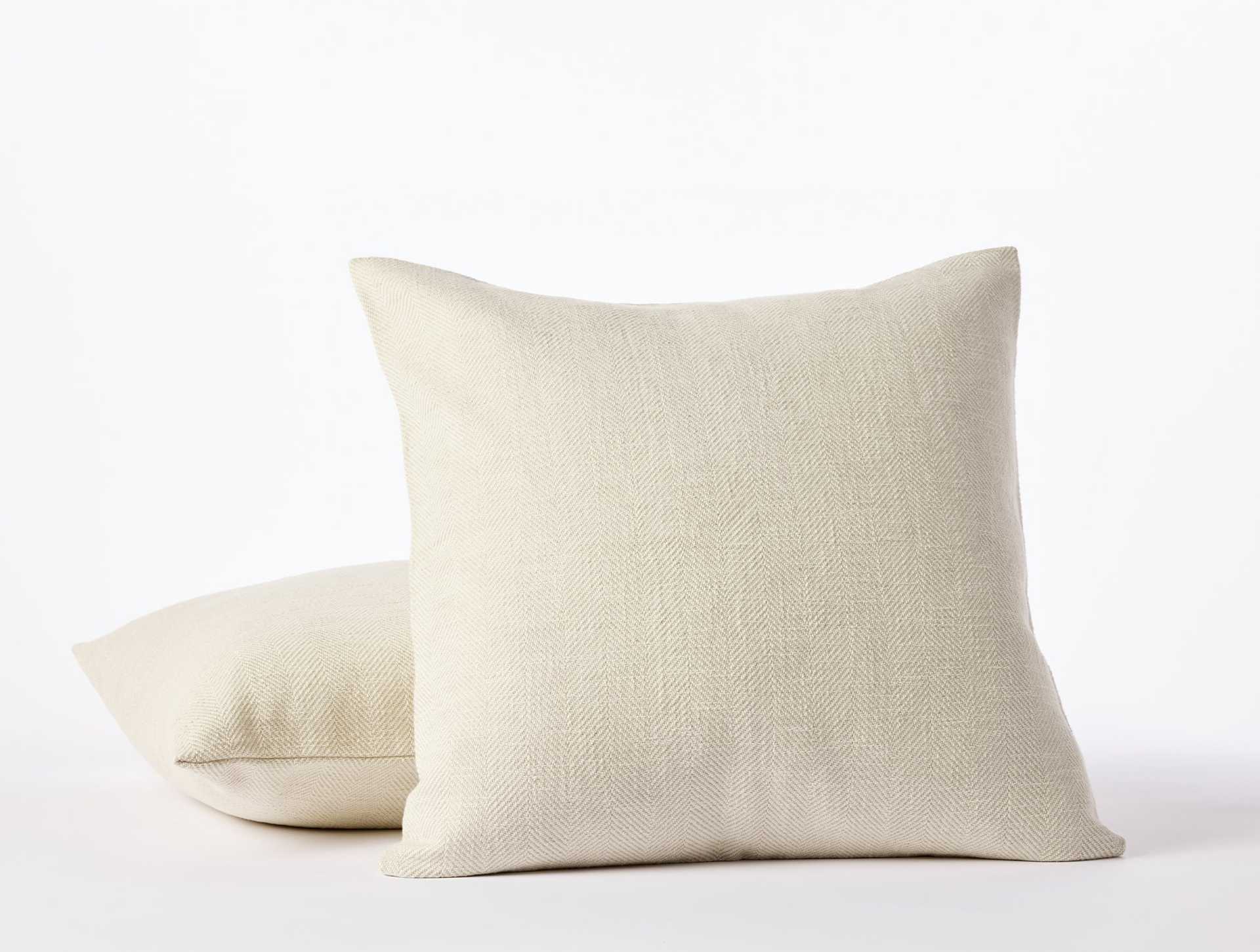
Consider the difference between two organic cotton home textiles. A herringbone pillow cover uses a woven pattern and slub yarns—yarns with intentional variation in thickness—to create visible texture and a substantial feel. A cotton sateen snuggle sack uses a smooth woven fabric, then adds handstitched surface detail and garment-specific features such as arm openings and a covered zipper. The fiber may be shared; the construction and purpose are not.
Origin statements can add another piece of context. A product description may identify where cotton was grown and woven or where an item was made. Those statements are useful, but they are not interchangeable with certification. Check the wording for the specific product rather than assuming that an origin detail applies to every item in a collection.
GOTS certification: a production standard, not a fabric type
GOTS, the Global Organic Textile Standard, is a certification framework for textiles made with organic fibers. It addresses requirements across the processing and manufacturing chain, alongside criteria that include environmental and social considerations. It is not a weave, a finish, or a synonym for “soft.” A GOTS-certified item can have different constructions and textures from another certified item.
In practical terms, a GOTS claim can help readers look beyond a simple fiber description and consider whether a textile has been assessed within a wider standard. Still, certification language is most meaningful when attached to the actual product and its documented scope. A statement that a product is GOTS certified is different from a broad claim about a whole brand, a factory, or every item made by a company.
For example, the [Canyon Organic Decorative Pillow Cover](/products/canyon-organic-decorative-pillow-cover-6078) is described as 100% organic cotton and GOTS certified. Its construction is specified separately: a herringbone weave formed with thick-and-thin slub yarns, a knife-edge finish, and an envelope closure. The certification and construction details complement one another, but they answer different questions. One concerns the textile standard; the other explains how the cover is made and handled.
When evaluating a certification claim, read the product page or label carefully. Look for the name of the standard, the item or material it applies to, and any scope details provided. If a particular claim matters to your decision, consult the certifier’s current public information or ask the retailer or brand for clarification. Certification marks should not be taken to mean that a textile is indestructible, automatically hypoallergenic, or suited to every care method.
Fair Trade Factory certification is a separate piece of the picture
Fair Trade Factory certification relates to production and workplace standards, rather than the agricultural status of cotton. It is distinct from GOTS, even when both appear in the same product description. One does not replace the other, and the presence of one certification should not be read as proof of the other.
A product listing may state that an item is made in a Fair Trade Certified factory. That is a specific claim about the manufacturing context described for that item. It does not, by itself, provide every detail about a supply chain, establish the conditions of every supplier, or describe the textile’s construction. For those questions, look for the information supplied for the product and the standards referenced by the certification program.
The [Pebbled Handstitched Organic Snuggle Sack](/products/pebbled-handstitched-organic-snuggle-sack-4843), for instance, is described as made from 100% certified organic cotton sateen, grown and woven in India. Its listing states GOTS and Fair Trade Factory certifications, and identifies practical features including arm openings, a covered front zipper, and handstitched texture. The combination gives readers several distinct facts to consider: material, origin, certification, design, and care.
That specificity matters. Certification can make production claims more legible, but it is not a substitute for understanding the actual item. A useful product description should still tell you what the fabric is, how the piece is constructed, what it includes, and how the maker recommends washing and drying it.
Construction terms that change how cotton feels
Construction is the architecture of a textile. The same basic fiber can become a flexible knit or a stable woven fabric, and each choice influences drape, surface, and use.
- Woven: Yarns cross over and under one another to form a fabric. Weaves vary in appearance and structure; herringbone, for example, creates a recognizable broken zigzag pattern.
- Knit: Yarn is formed into interlocking loops. Depending on the knit, the result may stretch or move differently from a woven fabric. A product description should identify the particular garment or textile construction where possible.
- Sateen: A woven structure associated with a smooth-looking surface. It is not the same as satin, and the term describes fabric construction rather than fiber origin or certification.
- Slub yarn: A yarn with deliberate thicker and thinner sections, creating visible irregularity and surface character in the finished fabric.
- Handstitched texture: Stitching adds a raised or patterned surface. It may contribute to a crafted look and feel, while also creating details to treat gently during laundering.
Finishing and garment details are just as practical. A covered zipper can reduce direct contact between the zipper and surrounding fabric. Arm openings affect how a wearable item fits and moves. An envelope closure lets a pillow insert be placed inside a cover without a zipper. A knife-edge finish creates a clean seam at the pillow’s edges. These features do not determine certification, but they can shape everyday usability.
In other words, “organic cotton” is a starting point, not a complete product description. Check the construction, seams, closures, texture, and intended use to understand what you are choosing.
Reading a product description without getting lost in the details
Textile listings can pack a lot into a few lines. A straightforward way to make sense of them is to read in a consistent order: fiber first, then construction, then certifications and origin, followed by features and care. This prevents one appealing phrase from standing in for the whole story.
- Identify the fiber. Is the item described as 100% organic cotton, a cotton blend, or another material? Confirm the wording on the item you’re considering.
- Find the construction. Look for terms such as knit, sateen, herringbone weave, or handstitched embroidery. These help explain texture and structure.
- Separate certification claims. Note whether GOTS, Fair Trade Factory, or another certification is named, and what the listing says it covers.
- Check origin details. Product descriptions may specify where the cotton was grown or woven, or where the finished piece was made. Keep those statements tied to the item listed.
- Review practical features. Closures, openings, seams, dimensions, and included components can matter as much as the material.
- Finish with the care instructions. Treat the instructions for that specific product as the guide to laundering and drying.
This approach is especially useful when comparing products that sound similar. Two items may both be described as organic cotton yet differ in fabric structure, surface detail, closure, or recommended wash method. A product name alone may not reveal those differences.
Care starts with the exact label
There is no single care routine for every cotton textile. Some cotton pieces can be machine washed on a gentle cycle and tumble dried on low; others call for hand washing. The finish, construction, sewing, and intended use all matter. When product-specific instructions are available, follow those over a general rule about cotton.
The Pebbled Handstitched Organic Snuggle Sack listing specifies a cold machine wash on a gentle cycle and low tumble drying. It also advises removing the item promptly and notes that a warm iron may be used if desired. Those directions are specific to that product; they should not automatically be applied to another cotton item, even one with the same fiber or certification.
The Canyon Organic Decorative Pillow Cover has its own instructions: machine wash cold on a gentle cycle with like colors, tumble dry low, remove promptly, and warm iron if desired. Matching colors in the wash can help avoid unwanted dye transfer, while a gentle cycle reduces rough handling. Removing a piece promptly from the dryer may help limit deep creases, though results vary with the fabric and load.
For any textile, check the care label before the first wash. If the item has a zipper or removable cover, follow the product’s directions about how to prepare it. Avoid adding bleach, high heat, or a more aggressive cycle unless the care instructions allow it. If directions are missing or unclear, contact the retailer or manufacturer rather than guessing based on a similar-looking product.
Hand washing, when specified, is not simply a more careful version of machine washing; it is a different handling method. Likewise, “low tumble dry” is not the same as air drying. Each instruction reflects the product’s stated care guidance. Following it is a sensible way to support the textile’s shape and surface over repeated use, though no care method can promise that a fabric will never change with time.
A note about baby sleep products
Textiles intended for babies deserve especially careful reading. A snuggle sack is a wearable product, so its sizing, fit, openings, closures, and care directions are product-specific matters. A description of organic materials or certification does not replace safe-use instructions, age and size guidance, or advice from a qualified pediatric source.
Follow the product’s current instructions and relevant safe-sleep guidance. Do not treat a garment’s fabric certification as a safety certification unless the product documentation explicitly identifies one. If you have questions about fit, warmth, or use, check the manufacturer’s guidance and consult an appropriate health professional. This article explains textile labels and construction; it is not a substitute for product safety directions or medical advice.
Common assumptions worth avoiding
- “Organic means every part of production is identical.” Organic fiber information and broader textile processing requirements are not the same thing. Read the named certifications and product details separately.
- “GOTS describes how the fabric feels.” It is a standard, not a texture. Knit, weave, yarn, and finish all contribute to handfeel.
- “Fair Trade and GOTS mean the same thing.” They address different aspects of production. If both appear, treat them as separate claims.
- “All organic cotton can be washed the same way.” Product construction and finish influence care guidance. Follow the specific label.
- “A certification means a textile cannot wear out.” Certifications do not eliminate ordinary wear, staining, shrinkage risk, or the need for appropriate care.
The bottom line: look at the whole textile
Understanding organic cotton is less about finding one magic label and more about connecting several useful details. Fiber information tells you what the textile is made from. GOTS and Fair Trade Factory claims relate to different standards and production considerations. Construction explains the fabric’s structure and surface. Origin statements and product features add context, while care instructions guide everyday handling.
When you read those details together, a product description becomes more than a list of appealing terms. It becomes a practical guide to what an item is, how it is put together, and what the maker recommends to maintain it. Whether you are comparing a textured pillow cover with a handstitched cotton snuggle sack or simply checking whether a piece can be machine washed, the most dependable habit is the simplest one: read the information for the exact product in front of you.
Quick checklist for textile labels
- Confirm the fiber content and whether the item is described as organic.
- Look for the specific certification names and read what the product listing says they apply to.
- Note construction terms such as knit, sateen, herringbone, or handstitched texture.
- Check origin, closures, dimensions, and included components on the individual product listing.
- Follow the care instructions provided for that exact item, especially for washing and drying.