Materials, farming & nature
Gingerlily Silk: What Responsible Sourcing Can Mean for Biodiversity
Silk may feel far removed from a farm, but every thread begins in a living landscape. Understanding that connection can help shoppers ask better questions about sourcing, production and the wildlife sharing the land.
Silk has a way of making the ordinary feel special. A pillowcase, scarf or travel accessory can be soft to the touch and beautifully finished. Yet the story behind the fabric starts well before it reaches a wardrobe or suitcase: with silkworms, the plants that feed them, the people who raise them and the agricultural systems that support production.
That story matters for biodiversity. Farms are not isolated from nature. Their management can influence the variety of plants, insects, birds and other organisms that live nearby, as well as the condition of soil and water. This does not mean that every silk product harms biodiversity, or that silk is automatically a more responsible choice than another textile. It means the questions are worth asking.
For shoppers curious about Gingerlily silk, a thoughtful starting point is not a sweeping verdict. It is a closer look at what the brand makes public about its supply chain, how specific its claims are and what evidence supports them. “Responsible sourcing” becomes meaningful when it describes practices that can be understood and checked—not just an appealing phrase on a product page.
Why silk sourcing has a connection to biodiversity
Most commercial silk is produced using the domesticated silkworm, Bombyx mori. Its caterpillars are commonly raised on mulberry leaves, so the availability and management of mulberry plants are central to many silk-producing systems. The precise practices can vary by region, farm and supply chain, and not every silk textile comes from an identical production model.
Mulberry cultivation can occupy land in different ways: as a dedicated crop, as part of a mixed farming system or alongside other vegetation. How land is prepared and maintained can affect the habitats available to wild species. A landscape with hedgerows, varied crops, field margins or natural vegetation may offer different conditions from a large, uniform planting with little space for other life. Those examples describe general agricultural principles, not verified details about any particular Gingerlily supplier.
Farming practices matter, too. Soil management, water use, pesticide decisions and the treatment of surrounding habitats can shape ecological effects. It is not enough to know that a fabric is made from a natural fibre: the fibre’s origin and the way it is produced help determine its wider footprint. Even then, biodiversity is only one part of the picture, alongside working conditions, animal welfare, energy use, chemical management and product durability.
That is why the phrase “silk is natural” cannot answer the whole question. Natural materials still come from production systems. A careful assessment considers the system, the evidence available and the limits of what can be concluded.
What “responsibly sourced” should invite you to ask
Responsible sourcing is most useful when it points to specific, verifiable information. A brand might explain where its silk is produced, identify the stages of its supply chain or describe requirements for farms and processors. Each detail gives readers something more substantial to evaluate than a broad promise of quality or care.
Start with traceability. Does the company identify the country or region where its silk originates? Does it explain whether it knows the farm, the silk-reeling facility or only the final manufacturing location? These are different levels of visibility. Knowing where a finished item is sewn does not necessarily reveal where the fibre was produced or how the land supporting it is managed.
Then look for descriptions of practice. A useful account might explain how suppliers are selected, what environmental requirements apply, how compliance is checked and what happens when a requirement is not met. If the information is limited, that does not prove that harmful practices occur. It does mean the public evidence is limited—and the distinction is important.
Third-party certification can add another layer, but it deserves a close read rather than automatic trust. Check what a certification covers, which part of the supply chain it applies to, whether it concerns environmental or social criteria, and whether the claim relates to the specific product in question. A certificate may offer relevant assurance while leaving other questions unanswered.
Finally, pay attention to the language. Terms such as “ethical,” “eco-friendly,” “sustainable” and “responsible” are broad. They are not, on their own, a description of a farming method, a traceability system or a biodiversity outcome. Clear claims are usually more precise: they tell readers what was done, where it was done and how the information was verified.
A simple framework for evaluating Gingerlily silk
Readers do not need to become supply-chain investigators to make a more informed comparison. A few practical questions can help separate what is known from what remains unclear:
- Origin: Is the silk’s country or region of origin stated, and does the information distinguish fibre production from garment or accessory manufacturing?
- Traceability: Does the company explain how far back it can trace its silk and what records support that account?
- Farming: Is anything disclosed about mulberry cultivation, land management, water, soil or pesticide practices?
- Biodiversity: Are there specific measures or commitments related to habitat protection, ecological monitoring or avoiding conversion of natural areas?
- Verification: Are claims supported by named standards, audits, certifications or other evidence that can be reviewed?
- Scope: Is the information relevant to the exact product, or does it describe a general policy that may not cover every supplier or item?
- Honesty about gaps: Does the brand acknowledge what it does not yet know or disclose, and explain whether it intends to improve traceability?
These questions are not a pass-or-fail test. They are a way to build a more accurate picture. A company may disclose detailed information about one stage and less about another. A consumer can recognize that progress without treating it as proof that every environmental concern has been resolved.
The difference between a fibre claim and a biodiversity claim
Product descriptions often focus on the fibre itself: silk type, weight, feel or care instructions. Those details can be helpful for understanding what an item is made from. They do not necessarily explain where the silk came from, how the silkworms were raised or whether biodiversity was considered in managing the land.
For example, a product description that identifies 100% Mulberry silk tells a shopper something about the stated material. It does not, by itself, establish the farm location, the conditions of mulberry cultivation, the use of pesticides or the presence of habitat protections. That distinction applies broadly across textiles, not just silk.
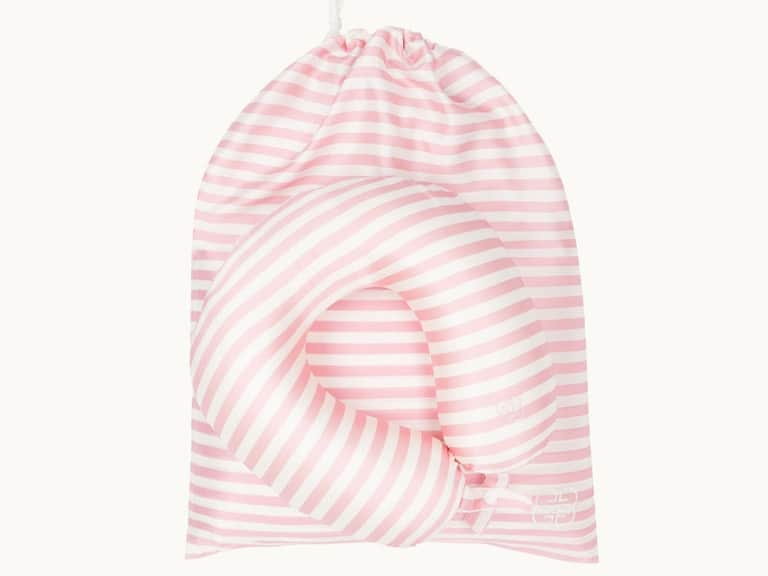
Gingerlily’s product information for its Silk Laundry Bag in Pink & Ivory Stripe, for instance, identifies the bag as 100% Mulberry silk and lists a 19 Momme fabric weight. Those are useful material and construction details for shoppers considering the item. They should not be mistaken for evidence of a particular biodiversity outcome or complete farm-level traceability. To assess sourcing beyond the material description, readers would need additional supply-chain information from the brand.
That kind of careful reading is not a criticism of one product. It is a way to avoid asking a label to prove more than it actually says. Material specifications answer one set of questions; sourcing documentation answers another.
Why biodiversity evidence can be difficult to find
Textile supply chains can involve several steps between a farm and a finished product. Fibre production, processing, dyeing, weaving and sewing may take place in different locations and involve different businesses. Information can become harder to follow at each handoff, especially when a company buys through intermediaries or works with multiple suppliers.
Biodiversity itself is also more complicated to measure than a single product attribute. A label can list a fibre percentage or a fabric weight. Assessing ecological change may require information about a landscape over time: which habitats are present, how land use has changed, what species occur there and how farming practices affect soil and water. One farm’s results cannot automatically be applied to every supplier or every growing region.
For that reason, strong reporting should be specific about scope and method. Is the company describing a policy, a supplier expectation, an audit or a measured environmental outcome? Those are not interchangeable. A commitment may be a meaningful first step, but it is not the same as evidence that a biodiversity benefit has already occurred.
Consumers can reasonably expect clarity without expecting every brand to publish a full ecological study for every product. Clear boundaries matter: what is known, what is being worked on and what the available evidence cannot yet demonstrate.
A responsible comparison does not declare one material a winner
When shopping for textiles, it is tempting to look for a simple ranking: natural versus synthetic, silk versus cotton, or one brand versus another. Biodiversity does not always fit neatly into those categories. Different fibres rely on different crops, production systems, processing methods and places. Their impacts depend on how and where they are made, as well as how long an item is used.
That makes comparisons more useful when they are specific. Ask whether the information relates to a particular product, whether the same stages of production are being compared and whether the claims use comparable evidence. A general statement that one fibre is “better for nature” may conceal important differences in farming, processing or land use.
Use is part of the story as well. Buying fewer items, choosing products suited to their intended purpose and caring for them so they last can help reduce the need for frequent replacement. These choices do not erase the impacts of production, but they can be part of a more considered approach to consumption.
For silk, following care guidance matters because a textile that is maintained appropriately may remain useful for longer. Care directions vary by item, so the label or manufacturer’s guidance should take priority over general advice. The broader point is simple: a material’s story does not end at the point of purchase.
How brands can make sourcing information more useful
Clear, accessible reporting can help people understand both the strengths and the limits of a sourcing programme. For a silk brand, useful information might include a description of the supply-chain stages it can trace, the regions where materials are produced and the standards or supplier requirements it uses. If those details vary by product, saying so helps shoppers avoid assuming that one statement covers everything.
On biodiversity, readers benefit from specific explanations rather than decorative nature language. A company could describe whether it assesses land-use risks, expects suppliers to protect natural habitats or collects information about agricultural practices. If it makes a claim about results, it should also explain what was measured, over what period and by whom.
Good reporting should be understandable without being simplistic. It can acknowledge that textile supply chains are complex while still explaining the steps being taken. It can also distinguish an intention from an achieved outcome. That kind of transparency gives consumers a fairer basis for making choices and gives businesses a clearer direction for improvement.
What shoppers can do next
If you are considering a Gingerlily silk item, begin with its product page and any publicly available sourcing or sustainability information. Look for details that answer the questions above, and note which points are confirmed versus unspecified. If a crucial detail is missing, asking the company directly can be useful: a clear question about origin, traceability or agricultural requirements is more likely to receive a meaningful answer than a general request to confirm whether a product is sustainable.
You can also compare how different brands explain their materials. Look for product-specific information, defined standards and an honest account of what the company can verify. Treat broad claims as starting points for inquiry, not as proof. If a brand cites a certification, check what that certification actually covers and whether it applies to the item you are considering.
Most of all, keep the scale of the conclusion in proportion to the evidence. If available information confirms the fibre but says little about farming, the careful conclusion is that the material is identified while biodiversity practices remain unclear—not that the product is necessarily harmful or beneficial.
The takeaway: curiosity is part of responsible sourcing
Silk connects a finished textile to silkworms, mulberry cultivation and the landscapes where production takes place. That connection creates a valuable opportunity to ask how fashion and home textiles relate to biodiversity. It does not provide an automatic sustainability verdict.
For Gingerlily silk, a fair assessment depends on the details the brand provides: how far materials can be traced, what production practices are known, whether biodiversity is addressed and what evidence supports each claim. Product specifications can tell shoppers about composition and construction, but they cannot stand in for farm-level sourcing information.
The most useful response to a beautiful fabric is not cynicism or unquestioning praise. It is informed curiosity. Ask what is known, notice what is missing and give greater weight to claims that are specific, transparent and verifiable. In that way, a simple textile choice can become a more thoughtful conversation about the living landscapes behind what we wear and use.